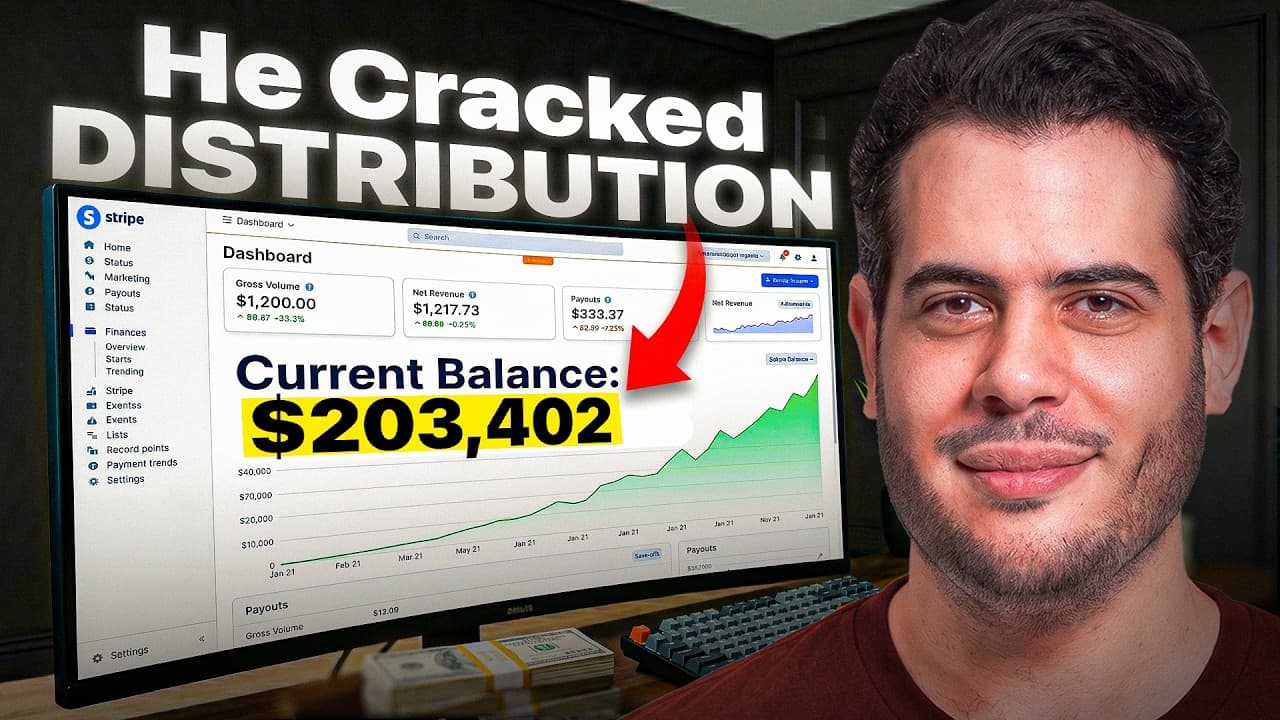
The marketing advice Roman Lakhnyuk keeps coming back to

By Maya · · 5 min read

Why do viral videos get views but no customers?
Roman Lakhnyuk, who grew CareerHound to about $25K MRR, says most viral videos never explain the problem, show the solution, or give anyone a reason to choose the product. What converts better for him is honest, useful content, like comparing his product with competitors, pros and cons included. He says one of those videos made about $10,000, roughly half of it from a repost on X.
Key moments
- 0:00The $10,000 video
- 0:19Meet Roman, founder of CareerHound
- 1:02Roman's background in psychology and sales
- 2:13Why founders give up on content marketing
- 3:51How to find short-form content ideas
- 5:03Can AI do your content research?
- 6:48Why viral videos don't always convert
- 8:40Breaking down the video that made $10,000
- 9:43Why trust matters more than a product plug
- 11:32Finding marketing ideas in everyday life
- 13:40Why Roman mentions his competitors
- 16:58Reddit marketing: lessons from getting banned
- 18:42How to write hooks using customer pain points
- 20:30How to find potential users for customer research
- 23:45How to find and hire UGC creators
- 28:06How Roman pays his UGC creators
- 31:38How to choose the right UGC creator
- 33:24Closing thoughts
Roman Lakhnyuk runs marketing for CareerHound, a job search platform now at about $25K MRR. His approach is built around short-form video and a team of UGC creators.
Most founders praise their own product in every video. Roman made one that walked through his competitors, their pros and cons, and where CareerHound was stronger and weaker.
He says that video made about $10,000, roughly $5,000 of it from someone reposting it on X.
It wasn't a growth hack. It's how he thinks about marketing in general: as a relationship with the people watching, not a pitch at them. That idea runs through everything he does, from the videos to who he hires to how he pays them.
Why most viral videos don't sell
Roman's example of what doesn't convert: a five second video, text on screen, with the app slipped into some kind of story.
Those videos can get a lot of views. But they don't explain the problem, don't show the solution, and don't give anyone a reason to choose the product. He calls it a lazy plug.
Views and customers are different outcomes. A video can win the first and do almost nothing for the second.
What converts better for him is content that's actually useful to the viewer, like an honest breakdown of the options, his included. It builds trust because the viewer gets real information even if they end up choosing something else.
I want to give them options. Why would I deprive them of options?
He compares it to a friend asking which service is better. If you only pitch yours, they tune out. If you say up front that you sell one, then lay out the three best options with their trade-offs, it feels completely different.
Where the ideas come from
Before writing anything, Roman fills his head with the niche. For CareerHound, that means job search content across TikTok, Instagram, Facebook, Reddit, X and LinkedIn. Videos, but also text posts and conversations.
After a few days of reading and watching hundreds of posts, the patterns show up on their own: the problems people keep repeating, the hooks that land, the formats that work.
Then he talks to potential users. Partly to check the problem is real, and partly to pick up the exact words they use to describe it.
His example is a wedding photo tool. "Collect wedding photos" describes a feature. Getting hundreds of separate texts full of photos the day after your wedding is an experience people recognize instantly. That's the hook.
Finding those people isn't complicated. Look for anyone posting about the problem on X, Reddit, LinkedIn, Instagram or a smaller forum, tell them who you are and why you're reaching out, and start a conversation. Roman's view is that founders stop after far too few attempts.
Reasonable action gets reasonable outcomes. Period.
On AI, his take is that it can help with research, but understanding the people you're talking to still takes your own attention. He compares content to a relationship: if you let AI write your texts to your partner, it won't go well, because relationships are full of nuance.
The brief a creator can film right away
Roman turns his research into a simple spreadsheet with four columns:
- 1.Hook: the opening line.
- 2.Reference: an example of the kind of video he means.
- 3.Script: what the creator should say.
- 4.Side notes: anything else they need to know.
The test is whether a creator can open it and start recording without spending any energy working out what he meant.
Make it stupid simple. So the creator, all they have to do is click open and then just record it.
How he finds and pays creators
He doesn't use a recruiting platform. His best creators are people already living the problem. For CareerHound, he looks for people posting about how hard it is to find a job, gives them free access to the product, then asks if they'd like to make paid videos.
They connect over something real, the creator gets something useful, and the audience hears from someone in the same situation. He also searches Reddit and Instagram for UGC creators looking for projects.
He pays a flat rate, roughly $15 to $25 a video in his arrangements: less for someone brand new, more for an experienced creator who brings a lot of value. Those are his numbers, not a market rate. The point is the priority behind them.
My goal isn't to pay people as little as possible. My goal is to have a working relationship, so that they feel good making videos for me.
Some creators get paid earlier than everyone else, because they use that money for their mortgage. He takes that into account on purpose.
He's also patient about early results. Instead of signing up ten creators and cutting anyone whose first two weeks flop, he looks at the fundamentals: how they speak, their energy and enthusiasm, how they present themselves, the backgrounds they choose. If those are good, he'll give someone months to find their footing, the way a value investor waits for the price to catch up.
What keeps it going
Roman thinks most founders run out of persistence before they run out of strategies. He calls it psychological runway.
Running a content system is full of small uncomfortable moments: reaching out to a stranger, negotiating a rate, watching the first five videos stall under 500 views. Each one wears people down a little until they give up. The tactics are already public. Keeping going through the disappointing parts is what most people don't do.
He's also learned that a channel has to be repeatable, not just able to produce a few sales. Commenting on Reddit posts about the problem CareerHound solves made him a couple of thousand dollars a month for about three months, until he overdid the promotion and got banned. The lesson isn't that Reddit doesn't work. It's that the way he used it couldn't last.
And he connects better marketing to being more direct in everyday life. He's become more concise and straight to the point in conversations over the last two years, and noticed his content changed the same way. Most people, in his words, say everything but the answer. Good marketing answers what the customer actually wants to know.
Some of his best ideas come from ordinary conversations, not marketing frameworks. Paying attention to people teaches you things a book won't.
Get good at making friends
Underneath all of it is one idea. Approaching a creator, paying them fairly, talking to users, making a video that helps someone choose: Roman sees all of it as relationship building.
For him, CareerHound isn't a business he builds relationships for. It's the other way around. The business is how he gets to know people, and he wants it to create life-changing moments for the users and the creators alike.
If people want to get really good at marketing, acquiring users, building creator teams, they just need to get really good at making friends.
Questions this talk answers
How much should you pay UGC creators?
Roman Lakhnyuk pays a flat rate of roughly $15 to $25 a video in his arrangements: less for someone brand new, more for an experienced creator who brings a lot of value. Those are his rates, not a market standard. His goal isn't the lowest price but a working relationship creators feel good about.
How do you find UGC creators?
Roman looks for people already posting about the problem his product solves. For CareerHound, that's people talking about how hard it is to find a job. He gives them free access, then asks if they'd like to make paid videos. He also searches Reddit and Instagram for UGC creators looking for projects.
How do you write a hook that converts?
Use the words customers use for their own problem. Roman's example is a wedding photo tool: "collect wedding photos" is a feature, but getting hundreds of separate photo texts the day after your wedding is something people recognize. He talks to potential users to check the problem is real and to learn their exact language.
Can AI do your content research?
Roman's view is that AI can help, but understanding your audience still takes your own attention. He compares it to a relationship: if you let AI write your texts to your partner, it won't go well, because relationships are full of nuance.
Where will your first 10 customers come from?
Answer 5 quick questions. Get the one channel to start with and a 7-day plan from a founder who did it.
Find my channel


Builders tune in weekly.