$0 for 12 months, then $20K+ a month: Rob Hallam of Super X

By Maya · · 4 min read
The guest
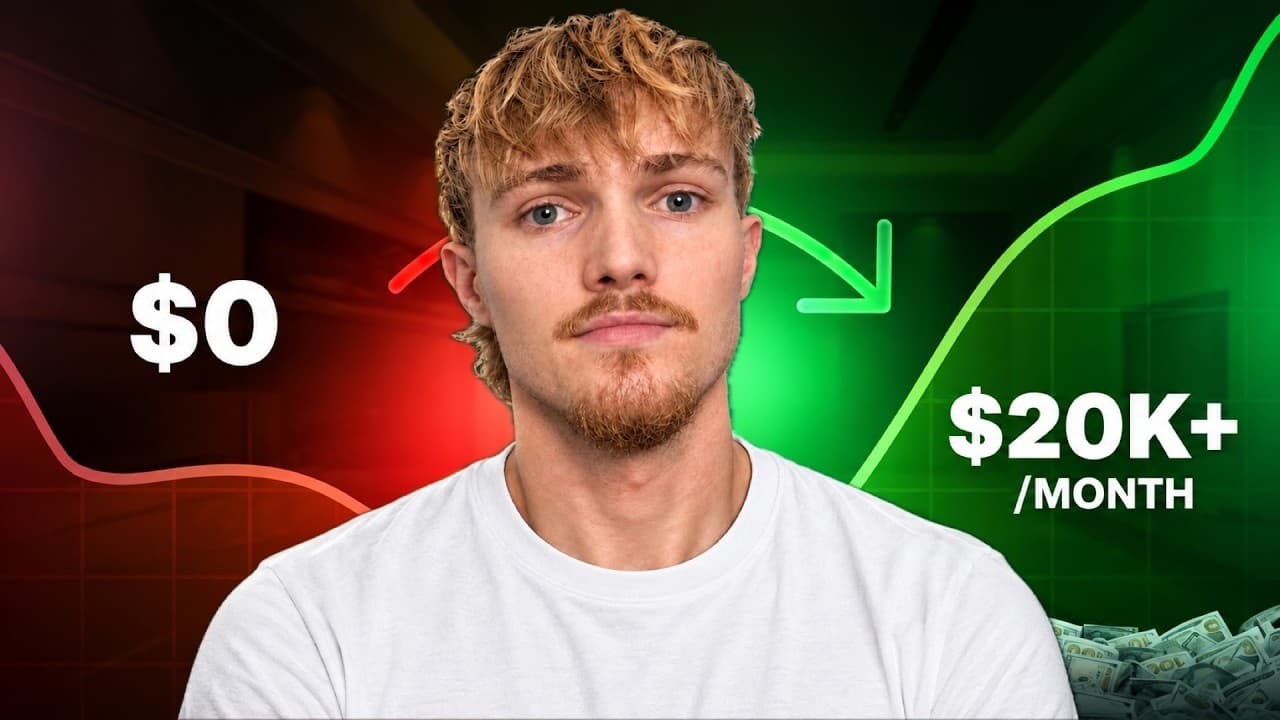
Rob Hallam
Cofounder, Super X
Validation · Bootstrapping · Build in public
How did Rob Hallam go from $0 to $20K+ a month?
After a year with no income, Rob Hallam posted publicly that he had made nothing in 12 months and offered freelance development. Someone suggested framing it as an agency, and his first client paid $3,000 for a month. The agency funded his runway and surfaced the problem that led him to Super X, which he worked on for six more months before it took off.
Rob Hallam graduated in computer science in 2022, got a software engineering job through an internship connection, and moved to Reading. He did what graduates do: followed the conventional path.
He disliked it almost immediately.
The work felt isolating. He overworked to prove himself. Then, in November 2022, a layoff gave him an exit, and, more usefully, a departure payment and a few months still on his lease. He used the time to look at e-commerce, dropshipping, and SaaS, joined a startup through a friend, and watched that startup run out of money.
He learned these things along the way.
From directory to cash flow: the beginner's constraint
After discovering indie entrepreneurship through ShipFast's founder on X, Rob and a friend started sharing their work publicly around September 2023.
His first product was Indidex, a directory of indie hackers, built partly because he wanted to meet more people like himself. A tweet about the idea got roughly 50 likes when he had around 100 followers. He treated that as validation and spent approximately four months building it.
He didn't monetize it.
This clearly illustrates a pattern he articulates well: applause is not a business. Interest is not a customer.
He ran down his savings while traveling and building things that went nowhere. Watching street vendors earn money while he earned nothing made it concrete. He eventually posted publicly that he had made nothing in 12 months and offered freelance development work.
Someone replied suggesting he frame it as an agency instead. He launched while the post still had attention.
His first client paid $3,000 for a month. That money did two things: it proved someone would pay for his skills, and it gave him enough runway to keep building products. The agency was a funding mechanism, and it turned out to be the setting in which he found the problem that led to Super X.
How he thinks about marketing channels
Rob defines marketing simply: getting in front of the right people.
X worked for his directory and his agency because his prospective customers were already there, and because he enjoyed doing it. He tried outreach and concluded he preferred public communication to cold implementation work.
His framework for channel selection rests on three things:
- Who are the customers, and where are they?
- What does the business allow? Paid acquisition needs cash. Search takes time. Building in public can expose what's working to competitors.
- What is sustainable for a solo founder? He's direct that enjoyment matters. No system works if the person running it finds it miserable.
He recommends trying several channels early, then concentrating on whichever combination reaches customers, suits the business model, and feels livable to maintain.
Find a painful problem, a workable distribution channel, and enough personal interest to keep going. That combination is worth looking for.
Agency work as a product discovery mechanism
Rob's agency clients came inbound through X. He posted progress and results, received direct messages, booked calls, and signed clients. Sharing the outcomes from those clients created more enquiries. The cycle reinforced itself.
Producing that content at scale exposed something. He was spending significant time thinking about and writing tweets. AI helped him draft more of them and identify what performed. But he noticed there wasn't a tool that did exactly what he wanted.
Existing products like Tweet Hunter and Typefully showed the category had demand. Rob built an internal tool called Brandcast. During his competitor research, he found Super X, then a Chrome extension with a different owner.
That owner posted publicly looking for a cofounder. Rob responded with a Loom video showing what he had built. They worked together for a week before agreeing to combine efforts.
He describes the sequence as preparation meeting chance: the agency surfaced the problem, Brandcast demonstrated his capabilities, and a timely post created the opening. He spent another six months working on Super X before it started working commercially.
The agency was where he found the product, not just a way to fund product development.
When to quit, when to keep going
Rob's threshold isn't a revenue number. It's a combination of signals.
His actual markers:
- Does the business have a painful enough problem at its core?
- Is there a distribution channel that reaches those people?
- Is there enough personal interest to keep working through the difficult middle parts?
If the answer to all three is yes, he keeps going. If one is missing, he looks for a way to fix the missing piece before abandoning the project.
His broader point: the beginner's real constraint is usually money, time, or both. A job fixes the money problem but limits building time. Building without revenue burns savings. Services such as an agency or freelance work can solve both if structured carefully. They generate cash and, if chosen well, proximity to real problems.
What he's building now
Super X. He's based in Southeast Asia, working through the product, moving between longer stays in Vietnam and Thailand rather than cycling locations every two weeks.
He's settled into a pace.
That pace was the point of most of the earlier experimentation, not the products themselves. The directory didn't make money. The startup ran out of funding. The agency was never the end goal. But each one moved him somewhere more useful than where he'd been.
That's how most of the better builders seem to get there.
Questions this talk answers
Are likes on a post validation for a startup idea?
No. Rob Hallam's first product, Indidex, got about 50 likes on a tweet when he had around 100 followers. He treated that as validation, spent roughly four months building it, and never monetized it. His lesson: applause is not a business, and interest is not a customer.
How do you choose a marketing channel as a solo founder?
Rob Hallam asks three questions. Who are the customers and where are they? What does the business allow, since paid acquisition needs cash and search takes time? And what is sustainable for you? He recommends trying several channels early, then concentrating on what reaches customers and feels livable.
Should you start an agency to fund your startup?
It worked for Rob Hallam. Services can solve a beginner's money and time problem at once, generating cash and, if chosen well, proximity to real problems. His agency clients came inbound through X, and the work exposed the problem that led to Super X.
When should you quit a startup?
Rob Hallam does not use a revenue number. He asks whether there is a painful enough problem, a distribution channel that reaches those people, and enough personal interest to keep going. If one is missing, he tries to fix that piece before abandoning the project.
Where will your first 10 customers come from?
Answer 5 quick questions. Get the one channel to start with and a 7-day plan from a founder who did it.
Find my channel


Builders tune in weekly.