$0 to $13K a month with mobile apps and cinematic content

By Maya · · 4 min read
How do you make money with a mobile app?
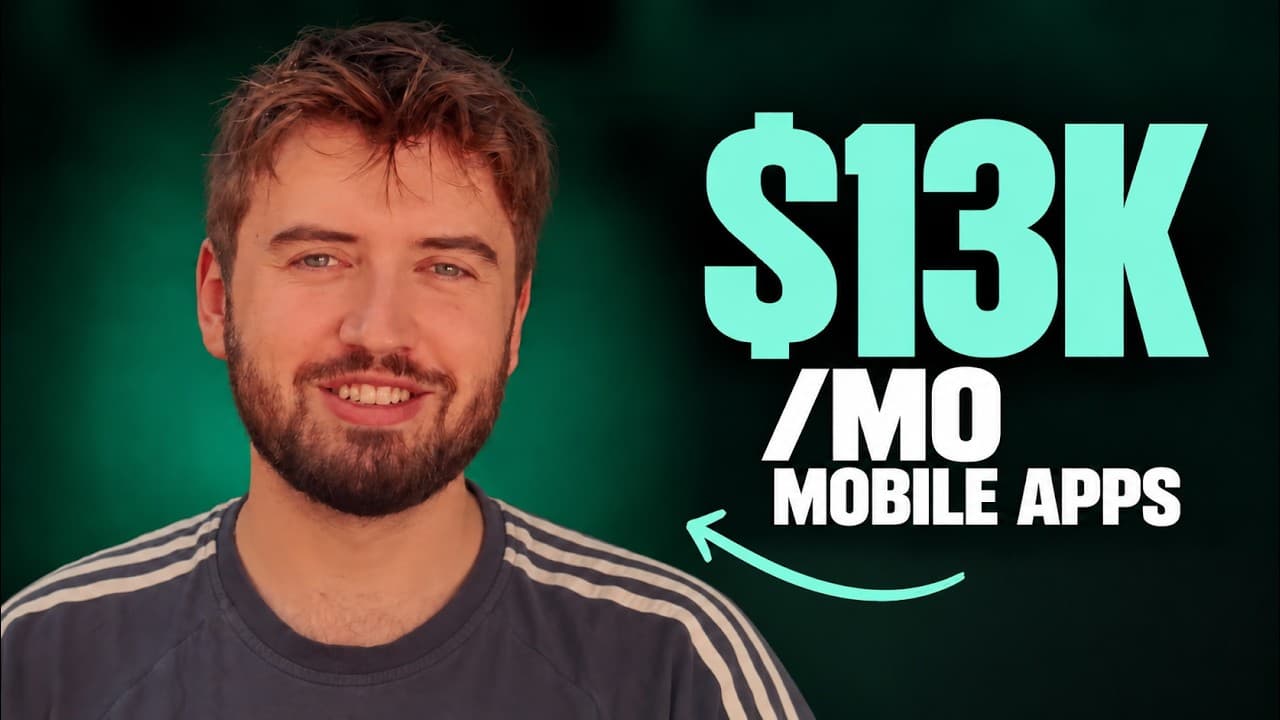
Frederick James reached $13K a month by pairing two things: a mobile app that sells to a core human desire, and cinematic content that builds an audience. The app makes the revenue, the content compounds the distribution, and paid ads accelerate it once a creative has been tested.
Two parts. Most people only use one.
Part one: a mobile app that sells to a core human desire.
Part two: cinematic content that builds a real audience.
The app generates the revenue. The content compounds the distribution. Together they create something harder to copy than either on its own.
The app ain't special, but it's important.
A few essentials.
1. Sell to a core human desire.
Status. Wealth. Health. Meaning. Beauty. Intimacy.
Your app should be a painkiller, not a vitamin. Most founders get the positioning wrong and spend months building something people don't actually need to buy. The desire has to be deep enough that someone will put a card number in.
2. Build native, iOS first.
- 70% of app purchases happen on iOS.
- The US accounts for roughly 35% of that.
- Native SwiftUI gives you better design outcomes faster than cross-platform alternatives.
- You get native keyboard, sheets, navigation, safe area, Dynamic Type, and accessibility defaults out of the box.
- Liquid glass comes as standard. OpenAI models understand iOS extremely well right now.
Build for Android later. If the app does well, that's essentially free revenue. Diluting your focus early costs more than it saves.
3. Follow proven models. Never copy 1:1.
Understand what's working in your category. Make it yours. Copying gets your app pulled and damages your reputation. Iteration and genuine improvement are different things.
4. Keep the product private while you build.
AI has made copying specific executions much easier. A broadly shared idea, like a habit tracker or a sleep app, isn't a secret worth protecting. Your specific design and marketing approach is.
For the first two months of his current build, Frederick shared progress publicly while keeping the app itself private. Share the lessons. Protect the execution.
Most people treat content as optional. They build first, then figure out distribution.
The cinematic element wasn't a marketing decision. Photography, filmmaking, and cinema were already things Frederick was genuinely interested in long before he launched anything. He'd published to YouTube. He understood color grading and how to use DaVinci Resolve. The visual quality in his posts came from existing practice, not a brand strategy.
That distinction matters more than it sounds.
Content built from something real compounds differently than content manufactured for reach.
What good content looks like here:
- Turn an experiment into a post. Include the result, what you actually learned, and what may not transfer to another business.
- Share the marketing reasoning behind a result, not just the number. Frederick's Apple ads article, roughly £1,000 MRR in 20 days, performed because it combined a concrete result with the logic behind it.
- Ask one question before you post: would this interest me if I were an outsider? Useful firsthand information or an honest challenge both pass. Pure attention-seeking fails.
What to stop doing:
- Generic engagement prompts that ask for opinions on nothing.
- Repetitive platform debates. A familiar topic can still work, but only if you're adding an original or genuinely funny angle.
- Manufactured replies. Leaving hundreds of hollow comments is different from supporting people you actually care about. The time cost alone should disqualify it.
Generic AI posts and automated replies don't just waste your time. They actively dilute your brand.
The app and content can take you a long way organically. Paid ads are what accelerate it.
A few things to understand before you start:
Paid advertising is emotionally hard. Initial spending rarely turns a profit immediately. If you expect early tests to work, normal experimentation will feel like failure, and you'll stop before you learn anything.
You need some willingness to lose money. Not recklessly. If every failed test feels catastrophic, you can't iterate fast enough to find what works. Identify what works. Concentrate effort there.
Profit margins with paid ads are approximately 30%. Plan for this. If you're measuring success against revenue rather than margin, you'll make bad scaling decisions.
Copying someone else's tactic doesn't remove the need to test it for yourself. Every niche is different.
No salary. No product revenue for the first two months.
Initial paid ad spend that didn't immediately profit.
Then: a clear signal. A creative that worked. An audience that compounded.
By the time Frederick hit $13k/month, three things were stable:
1. The app itself was solid, beautiful, useful, no broken functionality.
2. The content was consistently interesting to people outside my own circle.
3. The paid channel had been tested enough to know where to concentrate.
1. What constraints make a major career decision reversible for you? Don't use Frederick's circumstances. Run the numbers on yours.
2. What experiment can you turn into a post this week, result, lesson, and what may not transfer?
3. Review your last five posts. What was the clear reason for someone who doesn't know you to care?
This model works. The timeline, the effort required, and the profit at each stage will vary.
Start with the app. Start with the content. Test the ads when you're ready.
$13k/month is not the ceiling.
Questions this talk answers
What kind of app do people pay for?
Frederick James says to sell to a core human desire: status, wealth, health, meaning, beauty, or intimacy. The app should be a painkiller, not a vitamin, with a desire deep enough that someone will enter a card number.
Should you build for iOS or Android first?
iOS first, in Frederick James's view. He cites that 70% of app purchases happen on iOS and that the US accounts for roughly 35% of that. Build for Android later, once the app is doing well.
Are paid ads profitable for mobile apps?
Not immediately. Frederick James says early spend rarely turns a profit, you need some willingness to lose money while testing, and profit margins with paid ads are approximately 30%. Measure against margin, not revenue.
Where will your first 10 customers come from?
Answer 5 quick questions. Get the one channel to start with and a 7-day plan from a founder who did it.
Find my channel


Builders tune in weekly.