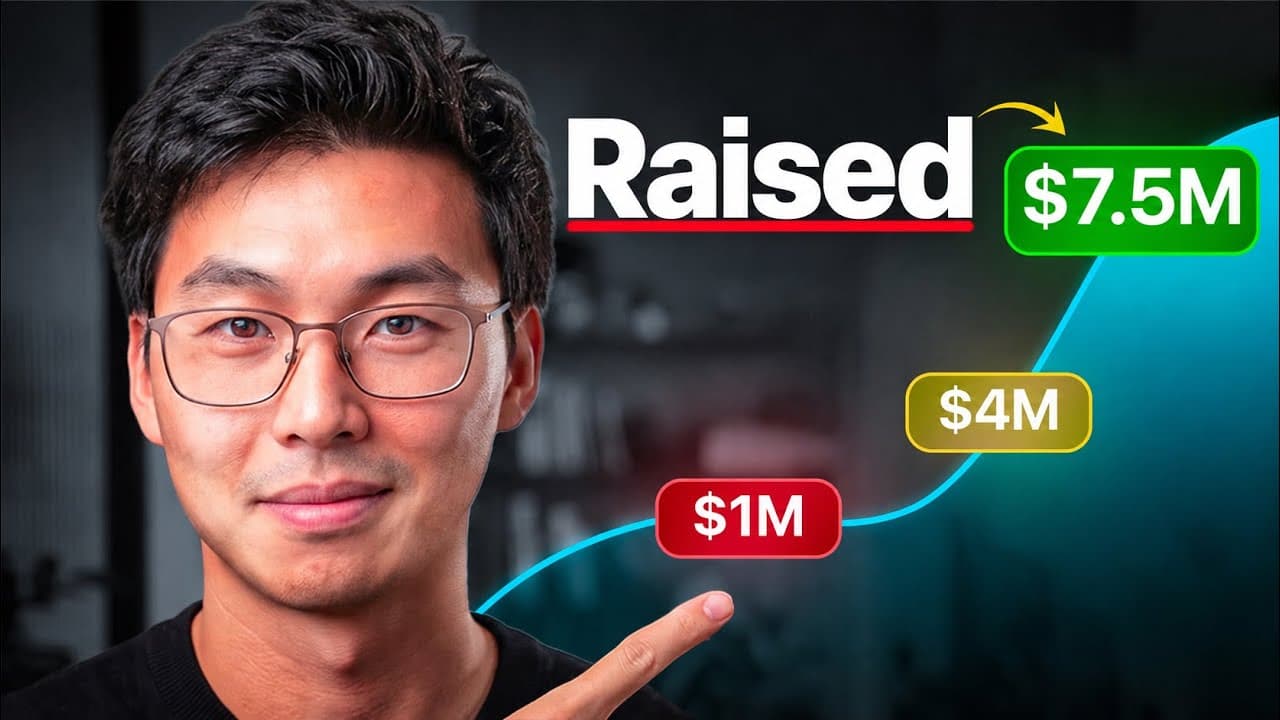
Dylan Zhang's startup advice after raising $7.5M and reaching 300K+ users

By Maya · · 3 min read
How do you validate a startup idea before building everything?
Dylan Zhang, founder of Pond, recommends building one core feature, showing the product itself, and running 5 to 10 ad creatives with different messages to get a conversion signal. The goal is data, not polish. Then find five to ten people who love it within the first 3 to 6 months and build with them.
Key moments
- 0:00Intro: Dylan and Pond
- 2:38Why first-time founders struggle to find product-market fit
- 3:22Where good startup ideas come from
- 4:56Testing demand with demo videos and paid ads
- 6:38The biggest mistake: guessing instead of validating
- 7:30Growing with your first users
- 9:04Product-market fit and early revenue
- 10:03What makes a good product: half a step ahead
- 12:45Why marketplaces are hard
- 14:21Which side of the marketplace to focus on first
- 17:05What founders can learn from Airbnb
- 20:17Bootstrapping vs raising venture capital
- 24:58How to know when to raise
- 26:36Vertical vs horizontal businesses
- 28:49Building a vision you can test
Dylan Zhang founded Pond in 2023. It's an AI-native marketplace (think Upwork, but built for a world where agents and humans both do the work).
His thesis: as AI expands what's possible, demand for personalised, task-specific help grows. Just like abundant information created demand for recommendations, abundant capability creates demand for direction.
He's thought carefully about how to build in that environment. Here's what I'm taking from the conversation.
1. Replace guesses with evidence.
Founders mistake personal enthusiasm for market demand.
Dylan's opportunity question is simple: what was previously impossible but has just become possible?
Start from a sector and a technological change you actually understand. He admitted he'd struggle building for consumer leisure products. He doesn't have spare time himself. That's not a failure. That's an honest constraint.
The trap is assuming your excitement signals demand. It usually doesn't.
2. Demo one feature. Then test.
- Build one core feature. Not everything.
- Show the product itself. Not a talking-head walkthrough.
- Run 5-10 ad creatives, varying the message and format.
- Let the algorithm find the likely customers for you.
He'd do this before anything else if starting again. The goal isn't a perfect product. The goal is a conversion signal.
You don't need polish. You need data.
3. Five people who love it beat five hundred who don't.
Within the first 3-6 months, find five or ten people who genuinely love what you're building.
That's your real product team. Maintain contact. Build with them. He mentions one committed early user becoming a shareholder. That's how seriously he means it.
A large early audience with low signal is noise. A small group with strong opinions is infrastructure.
4. Half a step ahead. Not ten.
Dylan's product-market fit framing:
Futuristic enough to create new value. Close enough that a real market already exists.
Too far ahead and you're doing research, not building a business. Too obvious and the advantage is already priced in.
His definition of PMF isn't only revenue. He values early products with convincing demand even before they charge. But he's clear: that's his optimistic, idealistic read. Know which version you're operating under.
5. In a marketplace, the software is the easy part.
AI makes software easier to reproduce. What's harder:
- The users
- The suppliers
- The relationships
- The liquidity
Dylan's Amazon comparison isn't that a small team can rebuild Amazon. It's that the network around the software is the actual moat. Anyone can ship features. Nobody can instantly recreate trust, liquidity, and habit.
The software is what gets you in the room. The network is what keeps you there.
6. Put 80-90% of early attention on demand.
Marketplaces live and die by this.
Customers who want something and pay for it attract supply naturally. Recruiting supply without demand is swimming upstream.
This doesn't mean ignoring suppliers. It means: understand the customer's existing problem before you choose what to build. Then let demand pull supply in.
The cold start is always manual. No universal shortcut. Reach out personally, test ideas, accept that it takes time.
7. Venture funding has a specific use case.
He respects indie hackers. A solo founder handles product, engineering, marketing, sales and growth without capital or a team. That's genuinely hard.
But he's honest about when VC makes sense:
- Large addressable market
- Scalable model
- Demonstrated demand
- Capital would meaningfully accelerate something
For heavier marketplace or infrastructure businesses, funding can make sense before monetisation, if usage is convincing. For a distribution problem disguised as a product problem, it usually doesn't.
His investor test: imagine a friend building this exact business. Would you invest? Why would that investment produce a return?
Build evidence of traction. Then communicate it publicly so the right people can find you.
8. Three questions that most founders collapse into one.
Before anything else, separate:
- 1.Does anyone want this? (demand)
- 2.How does the business earn money? (model)
- 3.What kind of financing does growth require? (capital)
Most early confusion comes from treating these as the same question. They're not.
Answer each one independently. Then build accordingly.
Dylan's version of this is Pond, an agentic marketplace he's been building since 2023. He doesn't claim to have solved every problem. What he does have is a clear-eyed framework for which problems to solve first.
That's usually where the useful builders start.
Questions this talk answers
What is product market fit, according to Dylan Zhang?
He describes it as being half a step ahead of the market, not ten. The product should be futuristic enough to create new value but close enough that a real market already exists. Too far ahead and you are doing research. Too obvious and the advantage is already gone.
When does raising venture capital make sense?
Dylan Zhang lists four conditions: a large addressable market, a scalable model, demonstrated demand, and capital that would meaningfully speed something up. His test is to imagine a friend building the same business and ask whether you would invest and why that investment would produce a return.
How do you start a marketplace with no users?
Dylan Zhang puts 80 to 90 percent of early attention on demand. Customers who want something and pay for it attract supply naturally. The cold start is always manual: reach out personally, test ideas, and accept that it takes time.
Where will your first 10 customers come from?
Answer 5 quick questions. Get the one channel to start with and a 7-day plan from a founder who did it.
Find my channel


Builders tune in weekly.